Run a business for long enough and you will bump into commercial law, whether you mean to or not. It sits behind every contract you sign, every supplier you deal with, every person you hire and every dispute you would rather avoid. You do not need to be a lawyer to run a business, but understanding the basics of commercial law helps you spot risks early, make better decisions and know when to get help. Here is a plain-English explainer for business owners.
What is commercial law?
Commercial law is the broad area of law that governs business and commercial transactions. It covers how businesses are formed, how they deal with each other and with customers, and what happens when something goes wrong.
As the Cornell Law School Legal Information Institute explains, commercial law covers most business, commerce and consumer transactions, and it draws together a wide range of subcategories, including contracts, corporate law, sales, secured transactions, intellectual property and more. You can read its overview on the Cornell LII commercial law page.
In practice, commercial law is less one single topic and more a toolkit that touches almost everything a business does.
The main areas business owners deal with
Most commercial legal issues fall into a handful of areas. These are the ones that come up again and again.
Business structure. How your business is set up, whether as a sole trader, partnership, company or trust, affects your tax, your liability and your paperwork. Getting the structure right early saves pain later.
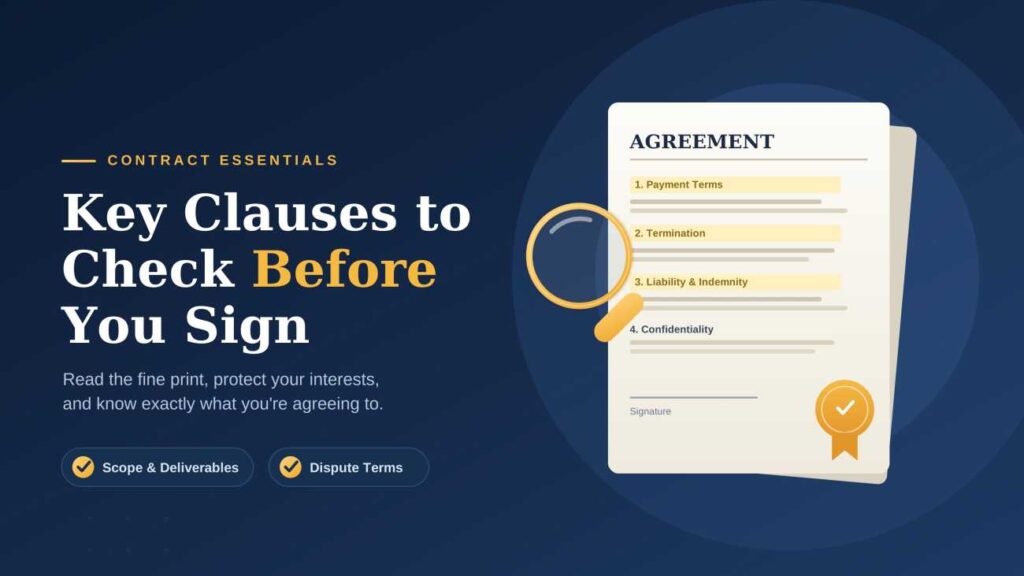
Contracts. Contracts are the backbone of commercial life, from supplier terms and client agreements to employment contracts and leases. A clear contract sets out who does what, who pays what, and what happens if someone does not deliver.
Sales and supply of goods and services. The terms on which you buy and sell, including warranties, delivery, payment terms and what happens with faulty goods, are all shaped by commercial law and consumer protection rules.
Employment and workplace. Hiring people brings a layer of legal obligations around pay, conditions, contracts, workplace safety and ending employment fairly.
Property and leasing. If you rent premises or buy property for the business, commercial leases and property law set the terms, and they are usually more complex than residential ones.
Intellectual property. Your brand, your content and your inventions can be valuable assets. Trademarks, copyright and related protections help you keep them.
Disputes. When a disagreement cannot be resolved by a conversation, commercial law provides the routes to sort it out, through negotiation, mediation, arbitration or court.
Compliance. Businesses have to meet licensing, reporting and regulatory obligations that vary by industry and location.
Why it matters
It is tempting to treat legal matters as something to deal with only when a problem lands on your desk. In reality, the businesses that handle commercial law well are the ones that think about it early.
A clear contract prevents most disputes before they start. The right business structure protects your personal assets. Good records and sensible terms mean that when something does go wrong, you are in a strong position rather than a scramble. Commercial law, handled properly, is as much about preventing problems as it is about fixing them.
When to get legal advice
Plenty of day-to-day business runs smoothly without a lawyer. But some moments are worth getting advice on before you act, including:
- Setting up or restructuring your business
- Signing or drafting a significant contract or lease
- Taking on a business partner or investor
- Buying or selling a business or commercial property
- Facing a dispute, a demand or a threat of legal action
In these situations, early advice is almost always cheaper than fixing a problem afterwards.
The bottom line
Commercial law is the framework that sits behind everything a business does, from the contracts you sign to the way you handle a dispute. You do not need to master it, but knowing the main areas and recognising when to get advice puts you in control rather than on the back foot. Because the specific rules differ between countries and regions and change over time, this is general information rather than legal advice.
If you want your contracts, structure or a commercial issue reviewed by someone who does this every day, it pays to talk to a specialist. DFG Legal Perth acts for business owners across a wide range of commercial matters.