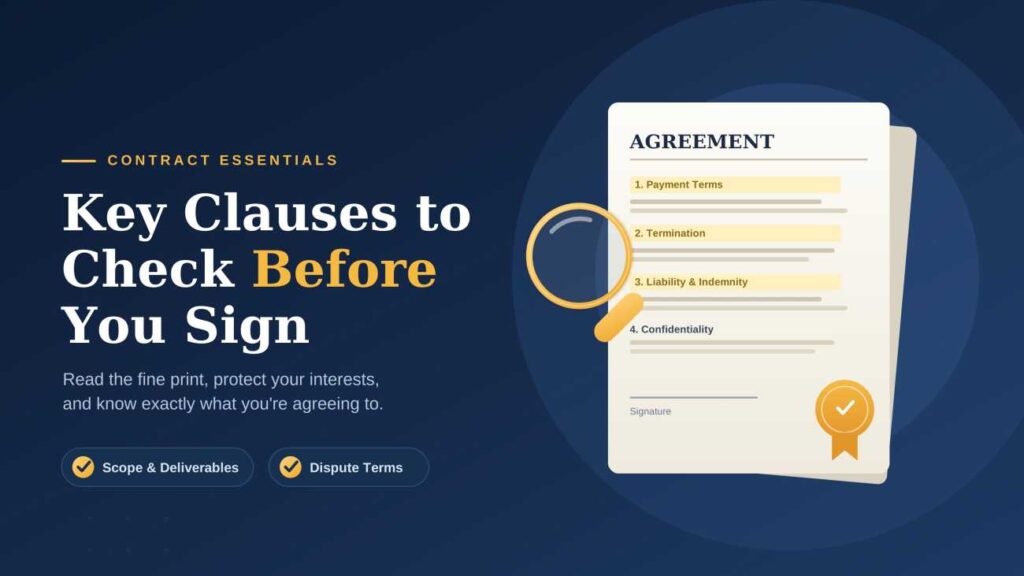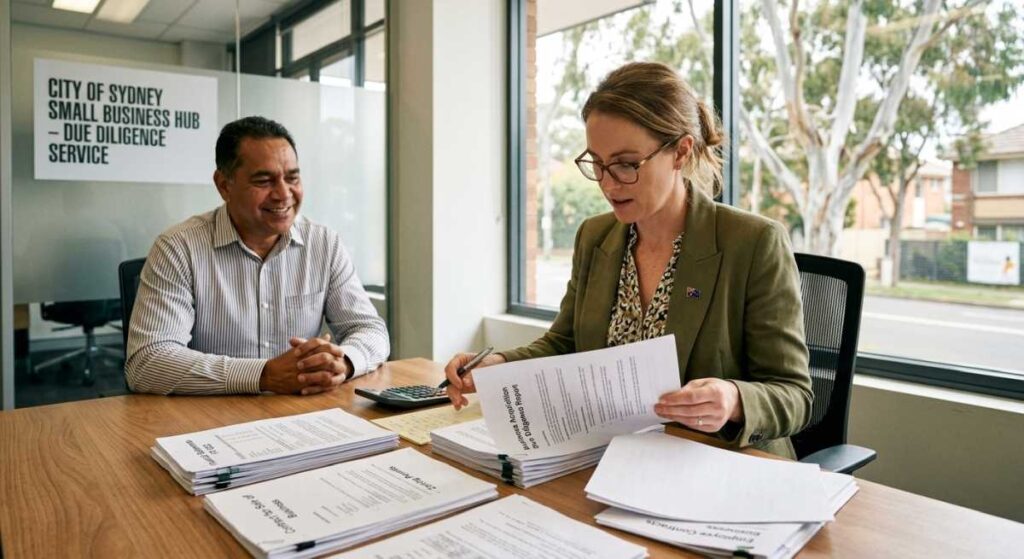
Ask a roomful of small business owners whether they have ever signed a contract they did not fully understand, and most hands go up. Ask whether it caused a problem, and a surprising number go up again. The trouble is rarely dramatic at the start. It shows up months later, when a customer will not pay, a supplier walks away, a tenant leaves early or a partner wants out, and everyone turns to the document that was signed in a hurry.
Yet it is also true that not every agreement needs a lawyer. Paying for legal help on a simple, low risk arrangement can be a waste, and plenty of people do fine with a clear template and common sense. The real question is not whether lawyers are good or bad value. It is where the line sits between “I can handle this” and “I should get advice first”.
This guide helps you find that line and decide when to get a lawyer to draft or review a contract. It explains the difference between drafting and reviewing, the situations where legal help pays for itself, the ones where you can safely go it alone, what advice typically costs and how to get the most out of it.
Drafting and Reviewing Are Different Jobs
People often use the two words as if they mean the same thing. They do not, and knowing which one you need helps you ask for the right service and get a sensible quote.
Drafting
Drafting means a lawyer prepares the contract from scratch, or builds it from a precedent and tailors it to your situation. You would usually want this when you are the one who will be using the document, for example:
- Terms and conditions you will use with customers
- A service agreement you will offer to clients
- Employment contracts for your staff
- A supply or distribution agreement
- A shareholders or partnership agreement
- A licence, franchise or confidentiality agreement
A good draft protects you, reflects how your business actually works and can be reused. It is a bit like having a made to measure suit rather than a one-size-fits-all garment.
Reviewing
Reviewing means someone else has prepared the document, and a lawyer reads it for you. This is common when you are being asked to sign something such as a lease, a sale contract, a loan or guarantee, a supplier’s terms, a franchise agreement or an employment offer. A review typically covers:
- Explaining what the contract says in plain language
- Identifying risks, gaps and one-sided clauses
- Suggesting changes and, if you wish, negotiating them
- Advising whether the deal matches what you were told
Which One Do You Need?
As a rough guide, if you are the author who will use the document again and again, you probably need drafting. If you are the signatory of someone else’s document, you probably need a review. Some situations need both, such as when you receive a draft that needs substantial rewriting.
When It Is Worth Getting a Lawyer to Draft or Review a Contract
There is no perfect formula, but a handful of questions tend to point in the right direction. If you answer “yes” to any of them, legal advice is likely to be a good investment.
The Stakes Are High
Think about the worst realistic outcome. If a mistake could cost you your home, your business, a large sum of money or your livelihood, get advice. Buying or selling property, signing a long lease, taking on business debt and buying or selling a business all fall into this category.
You Are Being Asked to Guarantee Something
Personal guarantees can make you responsible for another person’s or company’s obligations out of your own assets. They are a common source of surprise and distress. Always get advice before signing one.
The Contract Will Run for a Long Time
A one-off purchase is one thing. A five year lease, a long supply deal or a multi year employment agreement is another. The longer the commitment, the more the fine print matters, and the harder it is to exit if it turns out to be wrong.
The Other Side Wrote It
Contracts drafted by the other party tend to favour that party. That is not necessarily sinister, but it means you should not assume the terms are balanced. The more one-sided the document looks, the more valuable a review becomes.
You Cannot Easily Walk Away
If you have little or no ability to terminate, a termination fee is large or the exit process is complicated, a poor contract can trap you. Get advice before you commit.
The Document Is Complex or Unusual
If the contract is long, technical, full of defined terms, or involves unusual structures such as profit sharing, intellectual property licensing, earn outs or staged payments, the risk of missing something is high.
You Will Rely on It Repeatedly
If you will use the same terms with many customers or staff, a one-off investment in good drafting is likely to pay for itself many times over. A weak template multiplies problems across every deal.
Money, Property or Intellectual Property Is Changing Hands
Transfers of ownership need to be done correctly. Contracts for the sale of land, for instance, generally need to be in writing and signed, and the details of conditions, deposits and settlement can make or break the deal. Similarly, if you are commissioning creative or technical work, a lawyer can make sure you actually own what you paid for.
Something Has Already Gone Wrong
If there is already a dispute, a missed payment or a breach, get advice before you reply, sign anything new or make admissions. Early guidance can narrow the problem and preserve your options.
You Simply Do Not Understand It
This is a perfectly good reason. If you cannot explain in your own words what you are agreeing to, you are not ready to sign.
When You Can Probably Manage Without
It would be unrealistic to suggest every agreement needs legal input. In many cases, you can reasonably proceed without it, provided you take care.
- Low value, short term arrangements. A casual hire of equipment for a weekend, or a simple purchase from a reputable retailer.
- Standard consumer terms for everyday products. Where you have little ability to negotiate and the stakes are small.
- Simple, clearly written agreements between trusting parties. A short written record of what has been agreed is better than nothing, and you can sensibly handle it yourself if the amount at risk is modest.
- Work already covered by a reputable industry standard form. Some industries have widely used templates, though they still deserve a careful read.
Even in these cases, apply a few basic habits. Read the whole document. Check names, dates and amounts. Note renewal and cancellation terms. Keep a signed copy. If something feels off, pause.
The Hidden Risks of DIY Templates
Free templates and online generators are tempting, and sometimes they are fine. But they carry risks that are easy to underestimate.
- They are generic. A template written for no one in particular may not fit your business, your state or your risks.
- They may be out of date. Laws change, and a template that was sound several years ago may no longer be.
- They can create gaps. A missing clause on payment, liability, termination or intellectual property can be expensive.
- They can create conflicts. Mixing clauses from different sources can produce inconsistencies that a court may interpret against you.
- They give a false sense of security. A document that looks official is not necessarily enforceable or protective.
- There is no one to ask. If you do not understand a clause, a template cannot explain it.
A sensible compromise for some people is to use a template as a starting point and pay a lawyer to review and adjust it. That is often faster and cheaper than full drafting, and it gives you a document that fits.
Why Timing Matters
The best moment for legal advice is before you sign, and ideally before you have finalised the commercial deal. At this point, everything is still on the table.
- Before the heads of agreement or offer. Key terms such as price, term and conditions are easiest to shape early.
- Before you receive the formal contract. Some people ask a lawyer to prepare the draft so their terms are the starting point.
- Before you sign. Once the document is signed, changing it requires the other side’s agreement, and their incentives may be different.
- Before you act on it. Starting work, paying deposits or handing over assets can put you in a weaker position if the contract is still unsettled.
If you are being pressured to sign immediately, that is a reason to slow down rather than speed up. A genuine counterparty will usually allow a short period to get advice. If they will not, ask yourself why.
What a Lawyer Actually Does
If you have never engaged a lawyer on a contract, it helps to know what happens.
- Understands your goals. A good lawyer starts by asking what you are trying to achieve, not just what the document says.
- Reads everything. That includes schedules, attachments, policies and any terms incorporated by reference.
- Explains in plain English. You should come away understanding your rights and obligations.
- Flags risks and priorities. Not every issue is equal. A useful review separates the deal breakers from the nice to haves.
- Proposes changes. This may include rewording, adding protections or removing problematic clauses.
- Negotiates if asked. Some clients want a written summary only, and others want the lawyer to deal with the other side.
- Helps with execution. That can include checking who needs to sign, how documents are witnessed or executed and what steps follow.
- Looks ahead. A good lawyer suggests how to manage the contract after signing, such as diarising renewal dates or keeping records.
What Does It Cost?
Costs depend on the length and complexity of the document, how much negotiation is involved and how much work is needed. It would not be fair to name a single figure, but it helps to know the common models.
- Fixed fee. Common for a defined task, such as reviewing a lease or drafting a standard agreement.
- Hourly rate. Used where the scope is uncertain or negotiation is involved.
- Staged fees. For larger projects, with an estimate for each stage.
Ask for an estimate upfront, and ask what it covers. Find out whether negotiation, attendance at meetings and execution of documents are included. If the scope changes, a good firm will tell you before costs blow out.
The sensible way to think about price is to compare it with what is at stake. A few hours of advice on a lease that commits you to years of rent, or a contract that governs a large customer relationship, is usually small compared with the cost of a dispute. Disputes can consume time, money and energy, even when you win.
How to Get the Most From Your Lawyer
You can reduce cost and improve results with some preparation.
- Share the full picture. Bring the contract, attachments, correspondence and any earlier drafts. Explain the deal as you understand it.
- Be clear about your priorities. Is it price, flexibility, certainty, speed or protection? Lawyers can tailor advice if they know what matters most.
- Tell them about the other party. The size, reputation and negotiating position of the other side can shape the approach.
- Mention deadlines. Signing dates, settlement dates and notice periods all affect timing.
- Ask questions. If something is unclear, say so. You are paying for understanding.
- Say what you want from them. A written summary, a marked up draft or full negotiation each involve different work.
- Follow through. Advice only helps if you act on it. Keep notes and diarise key dates.
Choosing the Right Lawyer
Not all legal advice is the same, so look for fit as well as credentials.
Relevant Experience
Ask whether the lawyer regularly handles the type of contract you have. Commercial contracts, property contracts and employment agreements involve different issues.
Clear Communication
You want someone who can explain complex ideas in ordinary language and who is comfortable with your questions.
A Practical Approach
Some matters call for firm negotiation. Others call for a collaborative tone. Make sure the lawyer’s style suits your relationship with the other party.
Transparency About Costs
You should know what you are paying for. A lawyer who explains fees clearly is easier to trust.
Accessibility
Contracts often have tight deadlines. Ask how quickly they can respond, and whether they offer phone, video or in person appointments. For people in regional or outer metropolitan areas, a firm with a local office can make the process easier.
Independence
Get advice from someone who acts for you. Relying on the other party’s lawyer or agent to explain the contract is not the same.
Questions to Ask Before You Hire
- Have you dealt with contracts like mine before?
- Is this a drafting job, a review or both?
- What are the main risks you can see so far?
- What will your advice cost, and what does that include?
- Can you negotiate on my behalf?
- How long will it take?
- What do you need from me?
- What happens if the other side will not agree to changes?
- Will you help me manage the contract after signing?
- Who will actually be doing the work?
Common Mistakes People Make
- Waiting until after signing. The best leverage is before.
- Relying on verbal assurances. If it is not in the document, it may not count.
- Using the wrong template. A template for a different type of business or state can mislead.
- Skipping the schedules. Key terms are often hidden there.
- Ignoring renewal and exit terms. Automatic rollovers catch many people.
- Signing a guarantee casually. The consequences can be severe.
- Failing to keep records. A signed copy and the surrounding correspondence can be crucial later.
- Putting off updating old contracts. As your business changes, your terms may need to change too.
A Note on Unfair Contract Terms
Some protection exists for consumers and small businesses dealing with standard form contracts. Since 9 November 2023, changes to the Australian Consumer Law have prohibited businesses from proposing, using or relying on unfair terms in standard form contracts with consumers and small businesses. The Small Business Development Corporation explains that these rules apply to new or varied contracts from that date, and that only a court or tribunal can decide whether a term is actually unfair.
That is helpful, but it is a safety net, not a plan. The better strategy is to identify and negotiate problem terms before you sign.
Final Word
You do not need a lawyer for every agreement, but you do need one when the stakes, the complexity or the risks are higher than you are comfortable carrying alone. If you are the one writing the terms, good drafting protects you every time you use them. If you are the one being asked to sign, a review can reveal what the fine print is really saying. Either way, the cost of advice is usually modest compared with what it can save.
If you live in or near Mandurah and are looking for a lawyer to look over a contract before you sign, are you ready to speak with DFG Legal Mandurah about your agreement? For more plain-English guides, browse the law articles and resources, or get in touch with a commercial lawyer in Perth to talk through your situation.
Frequently Asked Questions
1. What is the difference between having a lawyer draft a contract and review one?
Drafting means the lawyer prepares the contract for you, usually so you can use it with customers, staff or suppliers. Reviewing means someone else has prepared the document and the lawyer checks it, explains it and suggests changes. Drafting suits documents you will reuse, and reviewing suits documents you are being asked to sign.
2. Is it worth paying for advice on a short or simple contract?
It depends on what is at stake. For a low value, short term arrangement, you can often manage with a careful read. For anything involving large sums, long commitments, guarantees, property or your livelihood, even a short contract can carry big risks, and a brief review is usually good value.
3. Can I use an online template instead of a lawyer?
You can, but be aware of the limits. Templates are generic, may be out of date and can leave gaps for your particular situation. A common compromise is to use a template as a starting point and have a lawyer review and adjust it, which is often quicker and more affordable than full drafting.
4. How early should I involve a lawyer?
As early as you can, ideally before the commercial terms are finalised and certainly before you sign. Early advice gives you the most room to negotiate, and it avoids the problem of trying to change a document the other side already regards as settled.
5. What if the other party will not agree to the changes my lawyer suggests?
That is useful information. Your lawyer can help you weigh up which changes are essential and which you can live with, and whether the remaining risks are acceptable. Sometimes a counterparty will compromise, and sometimes the right decision is to walk away.
Sources
- Contract law (Wikipedia)
- Unfair contract terms guide (Small Business Development Corporation, Government of Western Australia)
This article is general information only and does not constitute legal advice. Contract law is complex and applies differently depending on the facts and the document. Always seek advice from a qualified lawyer about your specific agreement before signing.