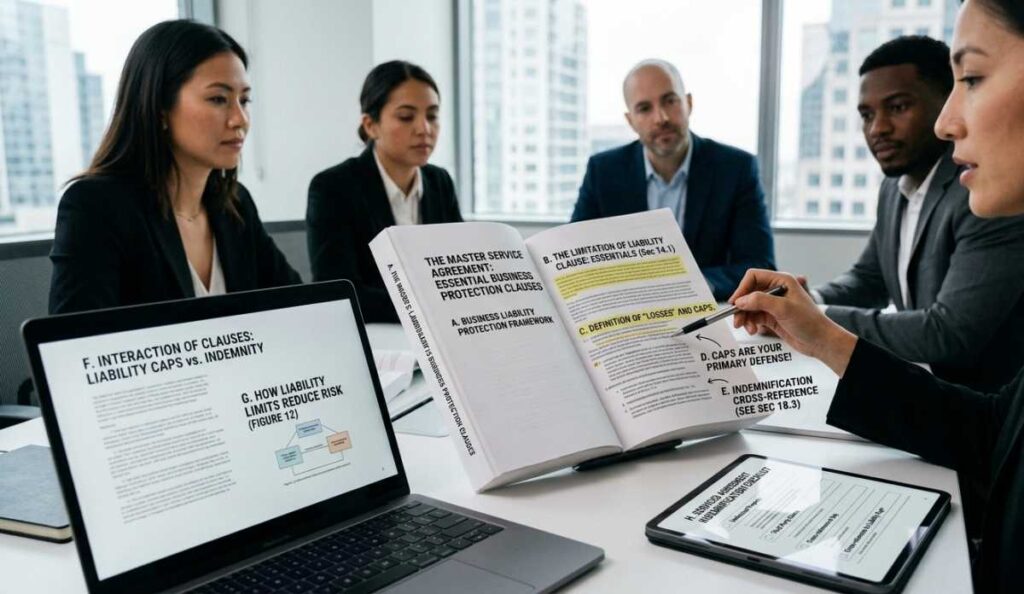
Contracts sit at the heart of almost every business relationship in Western Australia. From supplier agreements and service contracts through to employment arrangements and property deals, they set out who owes what to whom, when it is due, and what happens if things fall over. Most of the time contracts run their course without drama. But when the other side does not hold up their end of the bargain, the situation can quickly turn into a costly headache that threatens cash flow, relationships, and reputation.
If you are staring down a breach right now, or you want to be prepared before something goes wrong, this guide will walk you through what a breach actually looks like in law, the practical steps to take when one happens, the remedies available through the courts, and the tactical decisions that will shape whether you recover what you are owed. Understanding how to legally enforce a contract breach in Western Australia starts with knowing your rights, your obligations, and the realistic options in front of you.
None of this is a substitute for tailored legal advice on your particular matter. Contract disputes are messy and fact heavy, and small differences in the paperwork or the conduct of the parties can dramatically change the outcome. Use this as a grounding to help you make sense of the landscape and ask better questions when you seek professional help.
What Counts as a Breach of Contract Under Western Australian Law
Before you can enforce anything, you need to be clear that a breach has actually occurred. This sounds obvious, but plenty of disputes get derailed early because the party pushing the claim has not properly identified what obligation was broken, when it was broken, and by whom.
According to Wikipedia, a breach of contract is a legal cause of action and a type of civil wrong in which a binding agreement is not honoured by one or more of the parties, either through non performance or through interference with the other party’s performance. That definition applies broadly across common law jurisdictions, including Western Australia.
In practical terms, a breach happens when one party fails to do what the contract requires without a lawful excuse. That might mean not paying an invoice on the agreed date, not delivering goods to the required specification, walking away from a project part way through, sharing confidential information they were supposed to keep private, or using intellectual property in a way the contract does not permit. It can also mean doing something the contract expressly forbids, even if no direct harm results straight away.
For a breach to be enforceable, the contract itself has to be valid to start with. That means there must have been offer, acceptance, consideration, an intention to create legal relations, and terms clear enough for a court to enforce. Handshake deals and email chains can absolutely be binding contracts. You do not need a formal signed document. But the further you get from clear written terms, the harder it becomes to prove exactly what was agreed and whether it was broken.
Common Types of Contract Breaches
Not every breach carries the same weight, and understanding which category you are dealing with shapes what remedies are realistically on the table.
A material breach goes to the heart of the agreement. If you engaged a builder to construct a warehouse and they walk off the job with the roof half done, that is material. It defeats the core purpose of the contract and generally allows the innocent party to terminate the agreement and sue for damages.
A minor breach, sometimes called a partial breach, is a failure to perform some part of the contract without undermining the whole. The main obligations are still substantially met. If the warehouse is finished on time but one internal fitting is slightly off spec, you may be entitled to compensation for the shortfall but you cannot walk away from the deal.
An anticipatory breach occurs when one party makes it clear, through words or conduct, that they do not intend to perform when the time for performance arrives. If your supplier tells you three weeks out that they will not be delivering the promised shipment, you do not have to wait until the delivery date to act. You can treat the contract as broken and take steps to protect your position immediately.
Working out which of these categories applies matters because it determines your rights. Terminate a contract for what turns out to be only a minor breach and you may find yourself on the receiving end of a claim for wrongful termination. Getting this initial analysis right is where a lot of disputes are quietly won or lost.
First Steps When You Discover the Agreement Has Been Broken
The way you respond in the first days and weeks after a breach shapes everything that follows. Move too fast and you may waive rights or lock yourself into a position that limits your options. Move too slow and you may miss deadlines, prejudice your evidence, or let the other side quietly get their affairs in order at your expense.
Preserve and Organise Your Evidence
Start with the paperwork. Pull together every document that relates to the contract and the alleged breach. That includes the signed agreement itself, any variations or amendments, the correspondence trail leading up to the deal, invoices, delivery dockets, purchase orders, quotes, project plans, and every email, text, and file note exchanged before and after the problem emerged.
Do not edit, rearrange, or annotate the originals. Make working copies for analysis and keep the originals as they are. Save digital communications in a format that preserves the metadata. If key conversations happened over the phone or in person, write up a dated file note as soon as possible while your memory is fresh, and note who else was present.
Take stock of the financial impact. If the breach has cost you money, work out exactly how much and how you calculated it. Keep receipts, quotes for replacement work, evidence of lost sales, and anything else that shows what you have actually lost or will lose. Courts award damages based on evidence, not gut feeling, so the stronger your paperwork the stronger your position when it comes time to argue the numbers.
Communicate Carefully with the Other Party
Resist the urge to fire off an angry email the moment you discover the problem. Everything you write can end up in front of a judge, and heated communication rarely helps your case. It can undermine your credibility and give the other side ammunition to argue that you contributed to the breakdown of the relationship.
A carefully drafted written notice that sets out clearly what was agreed, what has gone wrong, and what you require the other party to do to fix it is usually the right first move. Many contracts include specific notice requirements. If yours does, follow them exactly. Sending notice to the wrong address, using the wrong form of words, or skipping a required step can invalidate the whole process and force you to start again from the beginning.
Keep a professional tone. Stick to facts, dates, and contract references. Give a reasonable but firm deadline for a response. Do not threaten action you are not prepared to take. The goal at this stage is to open a formal channel that either produces a resolution or lays the groundwork for the next step if the other side digs in and refuses to engage.
Remedies Available Through the Courts
When informal steps fail and the breach cannot be resolved by conversation, the law offers several remedies. Which one fits depends on the nature of the breach, what you have lost, and what outcome you actually want.
Damages are the most common remedy. These are monetary payments designed to put the innocent party in the position they would have been in had the contract been performed properly. Damages might cover direct losses, such as the cost of finishing a job somebody else abandoned, and in some cases consequential losses like lost profits, provided those losses were reasonably foreseeable at the time the contract was made.
Specific performance is a court order requiring the other party to actually do what they promised. Courts are cautious about this remedy and generally reserve it for situations where damages would not be an adequate substitute, such as contracts for the sale of unique property. You will rarely see it ordered for straightforward service or supply arrangements.
Injunctions are orders that either require a party to do something or, more commonly, stop them from doing something. If a former contractor is about to breach a confidentiality clause by disclosing trade secrets, an injunction can stop them in their tracks before the damage is done.
Termination and restitution allow the innocent party to end the contract and claim back what they have already provided. This tends to be relevant where money has been paid up front but the promised performance has not been delivered.
Liquidated damages may apply where the contract itself sets out a specific amount payable in the event of a particular breach. Courts will enforce these clauses provided the sum represents a genuine pre estimate of loss rather than a penalty designed to punish the breaching party.
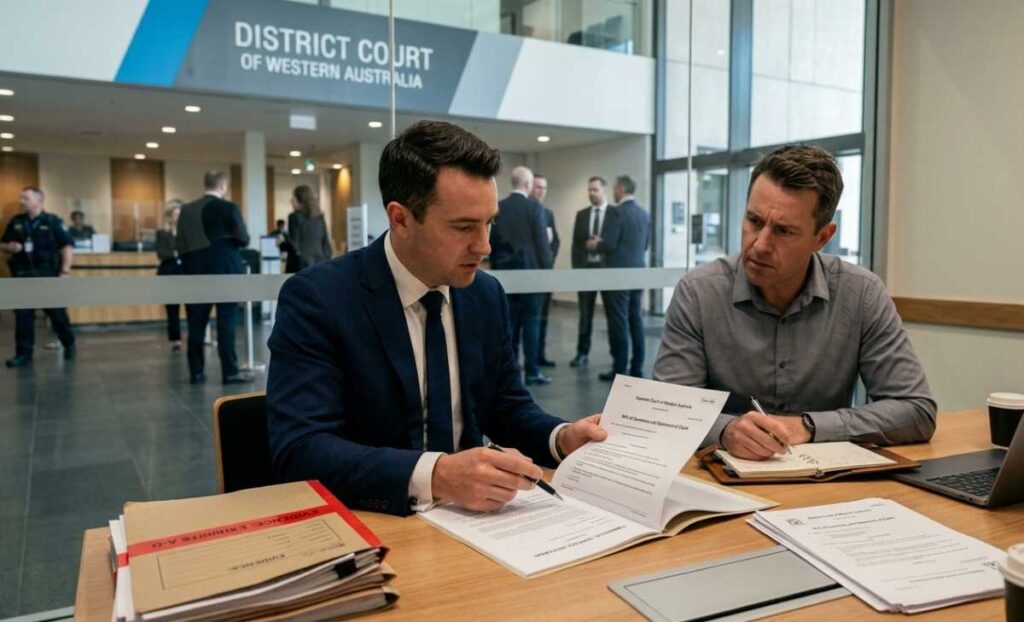
How to Legally Enforce a Contract Breach in Western Australia Through the Courts
Once you have decided that court action is on the cards, it is worth understanding the practical landscape. Western Australia has a tiered court system, and where your matter is heard depends largely on how much is at stake and the type of relief you are seeking.
Smaller claims, generally those involving disputes up to a set monetary threshold, are handled in the Magistrates Court. Larger commercial matters go to the District Court, and the biggest and most complex disputes end up in the Supreme Court of Western Australia. Each level has its own procedural rules, timeframes, and cost implications. Choosing the wrong court, or missing a procedural step, can add months of delay and significant expense to what might otherwise be a straightforward matter.
Litigation is not a fast process. Even relatively straightforward matters can take a year or more to reach a decision, and complex disputes can drag on considerably longer. There will be pleadings to draft, discovery to complete, witness statements to prepare, expert evidence to organise where relevant, and multiple pre trial conferences before you get anywhere near a courtroom.
Cost is another factor that catches many claimants off guard. Even if you win, you rarely recover all your legal costs from the losing party. Courts typically award costs on a party party basis, which reflects only a portion of what you actually spend on lawyers and disbursements. Budget accordingly and weigh the likely recovery against the anticipated spend before firing the starting gun.
None of this is intended to put you off pursuing a legitimate claim. It is intended to help you make the decision with clear eyes about what the process really involves and what it is realistically going to demand from you in time, money, and attention.
If you are looking for a business and employment lawyer who can walk you through the specifics of your situation, that is often a smart early step, even if only for an initial strategy session before you commit to any particular path.
Alternatives to Court That Are Worth Considering
Court is not always the best answer. It is expensive, slow, public, and can permanently damage commercial relationships that both parties might otherwise want to preserve. A range of alternative dispute resolution options exist, and many contracts actually require the parties to attempt these before litigation.
Negotiation between the parties, sometimes with legal representatives involved, is the simplest and cheapest form of dispute resolution. It works surprisingly often when both sides are commercial and want to move on. A frank exchange, sometimes framed as a without prejudice discussion so the content cannot be used later in court, can shift things quickly.
Mediation brings in a neutral third party who helps the parties talk through the dispute and try to reach a settlement. The mediator does not decide the outcome. They facilitate the conversation. Mediation is confidential, comparatively fast, and can produce creative outcomes that a court could not order, such as an ongoing commercial arrangement in place of a one off payment.
Arbitration involves a neutral third party who does decide the outcome, based on evidence and argument presented by both sides. Arbitration awards are generally binding and enforceable in the same way as court judgments. Many commercial contracts include arbitration clauses that require the parties to use this process instead of going to court, particularly in industries with specialised technical issues.
Expert determination is another option, particularly for disputes that turn on technical questions such as valuation or engineering assessment. An agreed expert reviews the material and produces a binding determination, usually much faster and cheaper than a full court process.
Which of these is right depends on your contract, your relationship with the other party, the sums involved, and what outcome you actually want to achieve. A short conversation with a lawyer at the front end can save enormous amounts of time and money by pointing you towards the process most likely to deliver.
Time Limits, Costs, and Practical Realities
One of the most important practical points to understand is that you cannot sit on a contract dispute forever. In Western Australia, the general limitation period for bringing a claim for breach of contract is six years from the date of the breach. Miss that window and your claim is statute barred, no matter how strong it might otherwise have been. Shorter time limits can apply in specific situations or under specific legislation, so do not assume you have plenty of time to work with.
Beyond the strict legal deadline, delay causes practical problems too. Witnesses move on and their memories fade. Documents get lost. Businesses change hands or wind up. The other side may quietly move assets out of reach so that even a favourable judgment ends up worthless because there is nothing left to collect against.
Cost is the other reality check. Even a straightforward commercial dispute can chew through tens of thousands of dollars once you factor in legal fees, court filing costs, expert reports, and the time your own team spends on the matter. For smaller claims, the economics may simply not stack up, and a negotiated settlement at a discount is often a better outcome than a technically successful judgment that cost more to obtain than it delivered.
The commercial question is always the same. What is the fastest, cheapest, cleanest way to recover as much as possible of what you are actually owed while protecting your business from further damage? Sometimes that means aggressive court action. Sometimes it means a hard nosed negotiation. Sometimes it means writing the loss off, tightening up your contract templates, and making sure the same problem does not happen again. Good advice will help you see the difference between these paths and choose the one that fits your actual circumstances.
Prevention is worth a quick mention here too. Most contract disputes trace back to poor drafting, unclear scope, or informal variations that were never properly documented. Investing a little in solid template contracts, a clear scope of works, and a habit of confirming variations in writing pays back many times over the first time it saves you from a dispute. A good contract is not a document you pull out when things go wrong. It is a document that quietly stops most disputes from happening in the first place.
Frequently Asked Questions
How long do I have to take action after a contract breach in WA?
The general limitation period is six years from the date of the breach for most contract claims in Western Australia. Some claims have shorter limits depending on the nature of the contract and the legislation involved. Do not wait to find out. Get advice early to protect your position and preserve your evidence.
Do I need a written contract to bring a claim?
No. Oral contracts and contracts formed through email and conduct can be legally binding and enforceable. The challenge is proving what was actually agreed, which is much harder without a written document. If you find yourself relying on an unwritten agreement, gather every scrap of correspondence, invoice, and file note you can, and be prepared for the other side to dispute the terms you say applied.
Can I terminate the contract straight away when the other side breaches?
Only if the breach is serious enough to justify termination. Ending a contract for a minor breach can leave you exposed to a claim for wrongful termination. The safer path is to seek advice on the nature of the breach before you take drastic steps, and to follow any notice or cure provisions in the contract itself before terminating the agreement.
What if the other party has no money to pay a judgment?
Winning in court and actually recovering money are two different things. If the other party is insolvent or has no reachable assets, even a strong judgment may be worthless. It is worth investigating the counterparty’s financial position early so you know what recovery is realistically achievable before you commit to expensive litigation.
Is it worth going to court over a small breach?
Often the honest answer is no. The cost of pursuing a claim through the courts can quickly outstrip the amount at stake for smaller disputes. Negotiation, mediation, or a low value claim in the Magistrates Court may deliver a better commercial result than a full blown court fight. Always weigh the likely recovery against the anticipated cost and time before choosing your path.